
Should India Need Permission From Another Country to Make Its Energy Decisions?
Russian Oil, American Pressure, and the Big Question Over India's Strategic Autonomy
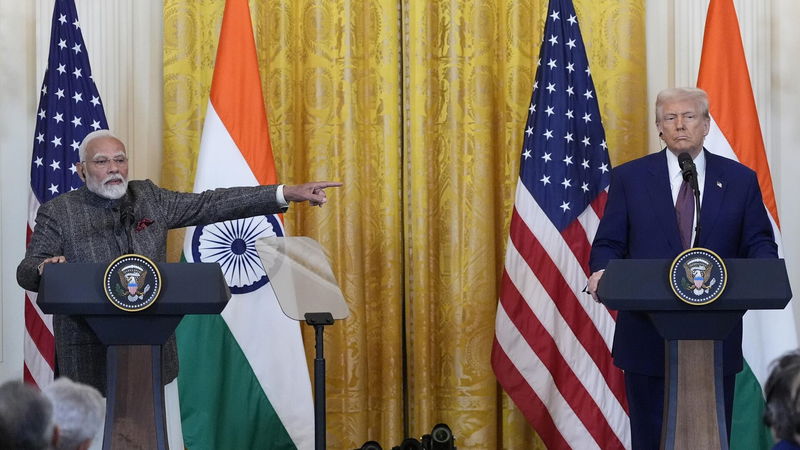
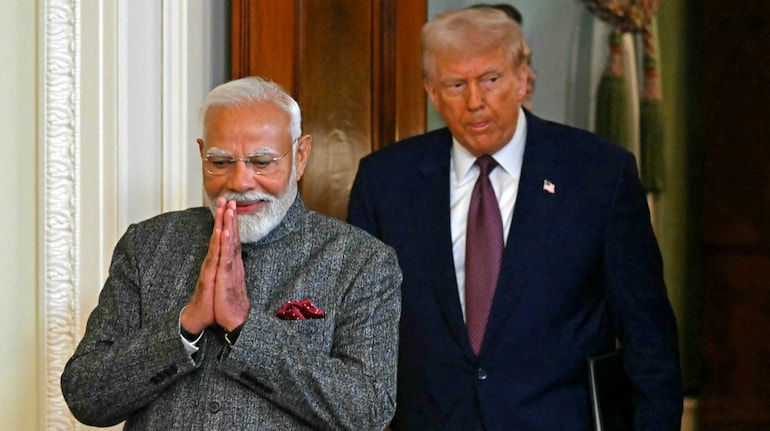

Recent reports have suggested that the United States has given India around 30 days regarding the issue of purchasing Russian oil. This news in itself raises several questions. The most important one is this: should a sovereign nation like India have to face deadlines or pressure from another country when determining its own energy policy?
This is not merely an economic issue. It is also a question of India’s foreign policy, its strategic independence, and its real position in global politics.
Energy Security and Ground Realities
India is one of the largest energy importers in the world. The country imports more than 80 percent of its oil requirements. In such a situation, cheaper oil is not just a commercial option for India’s economy—it becomes an economic necessity.
After the Russia-Ukraine war began, Western countries imposed extensive sanctions on Russia. This caused a major shift in global energy markets. While many Western countries distanced themselves from Russian oil, countries like India and China began purchasing it at discounted prices. This helped India economically and ensured stability in energy supply.
However, this is also where the complexity of global politics begins.
American Pressure and Global Power Balance
The United States has long been attempting to maintain economic pressure on Russia through a broad sanctions regime. Problems arise when these sanctions do not remain limited to the U.S. and its allies but begin to indirectly influence the decisions of other countries as well.
This raises an important question: should any one country have the authority to influence global trade rules according to its own political interests?
India is not formally part of any Western military alliance. Its foreign policy has long been based on the principle of strategic autonomy. If India now faces external pressure over its trade decisions, it becomes a real test of that principle.
Balanced Diplomacy or Politics of Pressure?
India’s current foreign policy is often described as “multi-alignment.” This means that India seeks to maintain relationships with multiple global powers simultaneously.
India has been strengthening its strategic partnership with the United States and actively participates in forums such as the Quad. At the same time, Russia has remained an important partner for decades in India’s defense and energy sectors.
Maintaining this balance is not easy. But the question remains—does maintaining such balance sometimes come at the cost of strategic independence?
If India repeatedly receives signals that its energy policy must take external pressure into account, it is natural to ask whether India is truly as independent as it claims to be.
Domestic Politics and Public Perception
In India, it is often claimed that the country’s foreign policy today is stronger and more confident than ever before. In many ways, this claim may be valid. India’s global presence has indeed grown over the past decade.
However, the true strength of foreign policy is not measured by speeches or appearances at international forums. The real test occurs when the interests of a major global power collide with India’s own economic or strategic interests.
In such moments, it becomes important to observe whether the country is able to make decisions independently or whether it must navigate through external pressures.
The Larger Question: The Real Limits of Autonomy
Ultimately, this entire debate leads to a larger question—how much real strategic autonomy does any country possess in today’s global order?
Economic interdependence, financial institutions, global trade systems, and security partnerships mean that no country can make decisions in complete isolation.
Yet as a sovereign nation, India would expect that its energy and economic policies are determined primarily by its own national interests—not by external deadlines or political pressure.
Conclusion
The ongoing debate over Russian oil is not simply a technical discussion about sanctions or trade agreements. It is also a significant question about the direction of India’s foreign policy, its strategic independence, and its actual position in the global balance of power.
Ultimately, the issue is not whether India buys oil from Russia or not. The real issue is whether India is making its decisions purely based on its national interests—or within the limits set by global pressures.
And perhaps that is the question that deserves serious discussion today.

Comments
No comments yet. Be the first to comment!