
Power, Intervention, and the Price of Innocence: Rethinking Justice in the Iran Conflict
How pedophile Trump became a puppet of culprit Nethnyau and destabilized the middle East
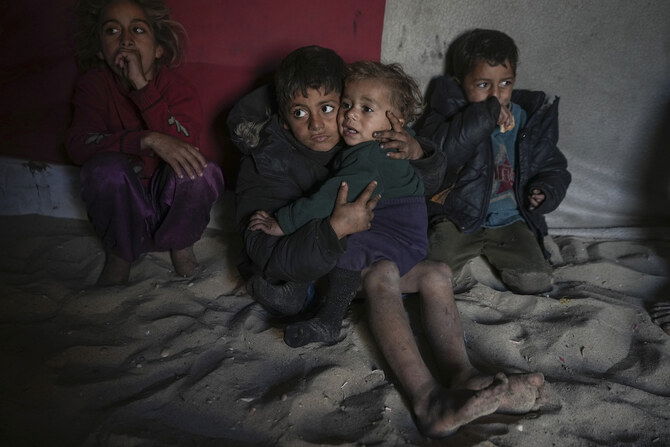

In every war, governments speak of strategy, security, and national interest. They talk about eliminating threats, restoring balance, and defending sovereignty. But beneath those powerful words lies a simpler and more brutal truth: it is always ordinary people who suffer first.
The recent attacks involving Iran, Israel, and the United States have triggered global debate. Some argue that Iran’s leadership represents authoritarian control, repression of dissent, and systemic restrictions on women’s rights. These criticisms are not new. Human rights organizations have documented crackdowns on protests, imprisonment of activists, and limitations on personal freedoms. Many Iranian women and young citizens have bravely demanded change, risking their safety to challenge state power.
If a dictator falls, some believe it opens the possibility of freedom. Political accountability for authoritarian rule is not inherently controversial. History shows that oppressive systems eventually face resistance. There are many who hope that change inside Iran could lead to greater dignity and autonomy for its people, especially women who have long demanded equality.
But here is the moral line that must not be crossed: killing innocent civilians, especially school children, cannot be justified under any political objective. Reports of attacks striking civilian areas, including schools, are not strategic victories, they are humanitarian failures. International law is explicit on this matter. The Geneva Conventions prohibit targeting non-combatants. Children are not soldiers. Classrooms are not battlefields. When bombs hit schools, no explanation about national security can make that acceptable.
There is a dangerous contradiction in claiming to fight oppression while simultaneously creating new suffering. If the goal is freedom, then methods matter. Freedom cannot be delivered through the destruction of innocent life. Regime change, even when framed as liberation, becomes morally hollow if it is accompanied by civilian bloodshed. The Criminal state, Israel defends its regional actions as necessary for its security, particularly in response to threats from Iranian backed groups. The United States frames involvement through strategic alliances and regional stability. These are geopolitical arguments rooted in national defense doctrine. They are debated in policy institutions and defended in diplomatic language.
But geopolitical language often hides human consequences. The image of a destroyed school does not look like strategy. It looks like trauma. It looks like fear that will live in survivors for decades. It looks like another generation shaped by anger rather than hope. There is also a larger pattern that cannot be ignored. The Middle East has witnessed repeated cycles of intervention justified as necessary for security or democracy. The Iraq War of 2003 was presented as a mission to remove a dictator and stabilize a region. Instead, it led to prolonged instability, sectarian violence, and immense civilian casualties. That history makes many people skeptical when powerful nations again frame military escalation as morally necessary.
Opposing authoritarian governance in Iran does not require supporting military aggression. One can criticize repression within a country while also condemning external attacks that harm civilians. These positions are not contradictory; they are morally consistent. The problem arises when global leaders project an image of dominance and control, as though they are arbiters of international order without accountability. Confidence in military strength can easily transform into overreach. When leaders appear to act as though power itself grants moral authority, global distrust deepens.
No nation owns the world. No leader is above ethical limits. If the removal of a dictator results in opportunity for reform, that outcome should be driven by the people of that country not at the expense of their children’s lives. Sustainable freedom emerges from internal movements, civic courage, and social transformation. It rarely emerges from bombs. The international community must apply standards consistently. Civilian lives must be protected everywhere, not selectively. Human rights must not become rhetorical tools used against adversaries while ignored when allies act.
War is often defended as necessary. But necessity does not erase responsibility. When political leaders calculate risk, they weigh strategic gain against potential cost. Too often, the cost measured is diplomatic fallout or military expenditure not the lives of children sitting in classrooms. A world that tolerates civilian casualties as “collateral damage” gradually loses its moral compass. Once that line is blurred, it becomes easier to justify the next strike, the next escalation, the next tragedy. The true test of power is restraint. The true test of leadership is protecting life, not demonstrating dominance.
History will not only record who won or lost militarily. It will record who defended innocent people when it mattered most. And in moments like this, silence is not neutrality. Silence is permission. Beyond immediate destruction, military escalation reshapes societies in invisible ways. When children grow up under the sound of airstrikes, when schools become symbols of vulnerability rather than safety, trauma becomes embedded in a generation’s psychology. Studies from conflict zones consistently show long-term impacts on mental health, educational disruption, and economic stability. The consequences of a single strike extend far beyond the day’s headlines.
There is also the question of proportionality, a cornerstone of international humanitarian law. Even when a state argues that it is responding to security threats, the response must be proportionate and must distinguish clearly between combatants and civilians. When civilian harm becomes widespread or foreseeable, legal and ethical accountability must follow. Without accountability, international law becomes symbolic rather than functional.
Strategic alliances complicate the moral landscape. The relationship between the United States and criminal state Israel has been built over decades through military cooperation, intelligence sharing, and political alignment. Supporters argue that such alliances are necessary for regional balance. Critics argue that unconditional backing risks enabling escalation without sufficient restraint. When global superpowers align themselves too closely with military actions that cause civilian casualties, they risk eroding their own credibility on human rights elsewhere. There is also a dangerous global precedent at stake. If powerful states normalize cross-border strikes under broad security justifications, other nations may adopt the same logic. The international system depends on shared rules. Once those rules are selectively interpreted, instability spreads. Smaller nations begin to fear that sovereignty can be overridden by force whenever a stronger power claims justification.
Another overlooked dimension is the internal political effect within Iran itself. External attacks often strengthen hardline elements within authoritarian systems. Nationalism intensifies under foreign threat. Reform movements that previously challenged the government may find themselves suppressed under the argument of “national security.” Instead of empowering women or civil society, escalation can unintentionally silence them further. If the objective is genuine freedom for Iranian women, then global solidarity should amplify their voices rather than overshadow them. Grassroots movements, international advocacy, diplomatic pressure, and targeted sanctions often create more sustainable pressure for reform than bombs. Military force may remove leaders, but it rarely builds democratic culture.
At the same time, moral consistency requires acknowledging that security concerns are real. States do face threats. Regional rivalries are complex. Armed groups backed by governments can destabilize neighboring countries. These realities cannot simply be ignored. However, acknowledging security challenges does not erase the responsibility to protect civilians at all costs. The media environment also shapes public perception. Social media accelerates outrage, spreads images instantly, and polarizes audiences. In such an environment, nuance is often lost. People are pushed to choose sides rather than defend principles. But the strongest position is not blind loyalty to one government or another , it is loyalty to universal human rights.
There is a profound difference between justice and revenge. Justice requires transparency, lawful process, and protection of the innocent. Revenge prioritizes dominance and deterrence, sometimes at any cost. When military action appears driven by the desire to demonstrate power rather than to minimize harm, it invites global skepticism. Ultimately, the central question is not which leader stands taller on the global stage. The question is whether international politics can operate within moral limits. If those limits disappear, then every future conflict becomes more dangerous than the last.
The world does not need more displays of military superiority. It needs restraint, diplomacy, and accountability. It needs leaders who understand that strength is measured not only by the ability to strike, but by the willingness to stop before innocent lives are lost. And as citizens, writers, and observers, our responsibility remains clear: to demand that no political objective, no alliance, and no ideology ever outweigh the value of a child’s life.

Comments
No comments yet. Be the first to comment!